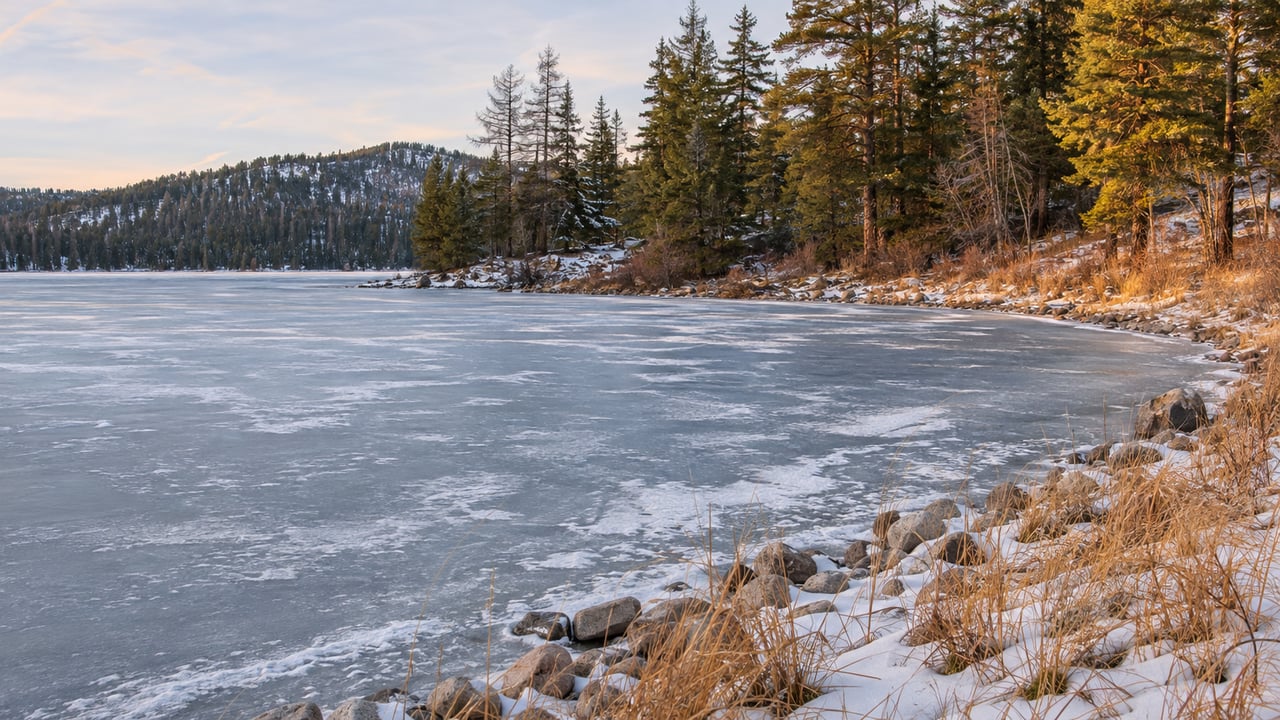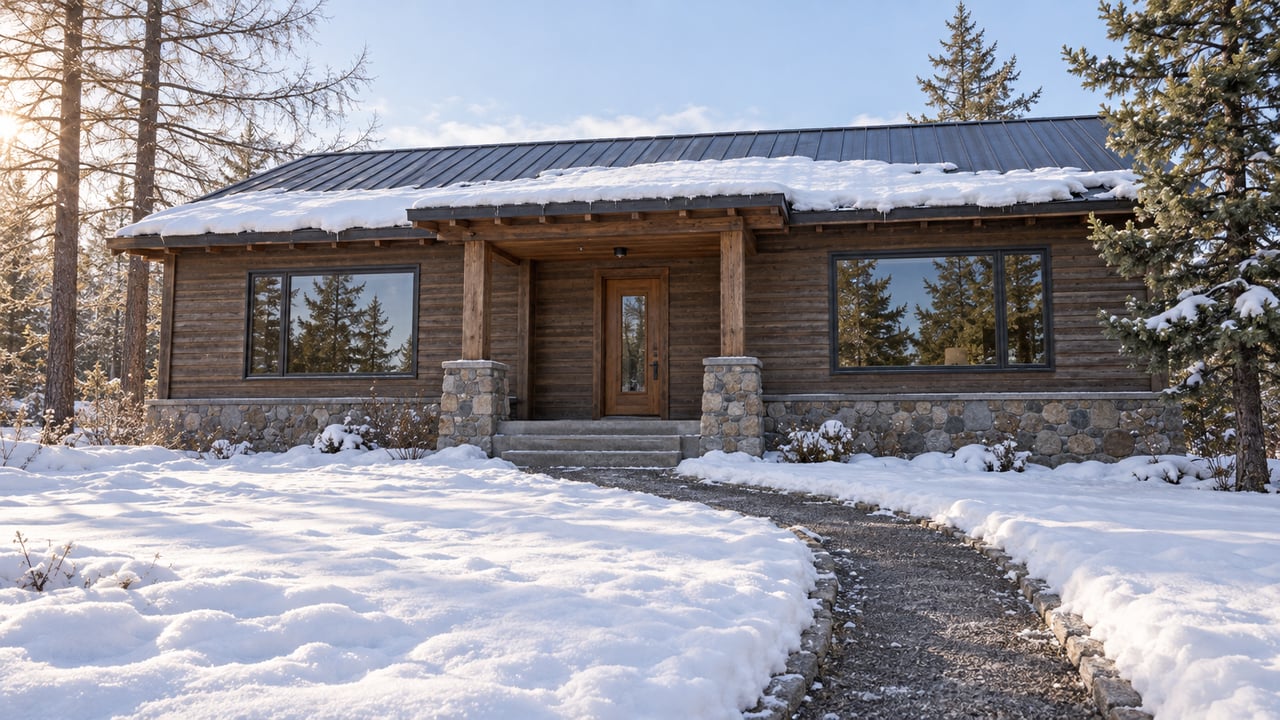
On the morning of Feb. 24, 2026, the groomer for the Bigfork Community Nordic Ski Trails posted a short report. It was 31 degrees, the trails were caught in what the club called "the typical Foothills freeze/thaw cycle," and the snowpack was too thin to groom without damaging the equipment. The report ended with a line that doubled as last winter's summary: "We may have just had a four day ski season this year."
That report shows how this trail system works. It sits at the corner of Foothills Road and Jewel Basin Road, and nobody sells tickets for it. A nonprofit leases the ground from the state, grooms it with paid staff and donated money, and opens it whenever the snow allows. Every skier 12 and older on it is supposed to carry a state license. The trails have no trail fee, and the ground under them is still licensed, leased land that exists to earn money for Montana's school trust.
What is out there
North Shore Nordic Club describes the Bigfork system as more than 10 kilometers of flat, rolling and steep terrain on Montana state land. Grooming runs December through March when the weather allows. The trails are groomed for skiing. Snowshoers are welcome as long as they follow the posted etiquette. The club asks hikers without snowshoes, snowmobilers, ATV riders and fat bikers to recreate somewhere else, and it asks dog owners to keep dogs off because tracks and waste damage the groomed surface. The club also posts a printable trail map.
The club is a 501(c)(3) in its 22nd year. It maintains more than 30 kilometers across two systems: the Bigfork trails and the Blacktail Nordic trails above Lakeside. It works with the Swan River Ranger District and the Montana Department of Natural Resources and Conservation. It requires no trail pass and charges no trail fee.
Whose ground it is
On its Bigfork page, the club says it pays an annual state land use fee of $1,200 for the trail system. On its home page, it lists a School Trust Lands lease among its standing costs, along with grooming equipment and maintenance, liability insurance and paid grooming employees.
The lease points to how state trust land differs from a national forest or a city park. The Montana DNRC says trust lands have a constitutional purpose, which is to help fund Montana's public schools and other institutions as trust beneficiaries. The department is required to manage them to maximize long-term revenue. They are working lands, earning money from grazing and agricultural leases, timber, minerals, commercial development and recreation licenses.
Recreation on that land carries a charge for the same reason. DNRC reports that in fiscal year 2026, recreation on state trust land contributed more than $2.4 million to public schools and other institutions in Montana. The trails at Foothills and Jewel Basin are part of that system. The club pays for the right to groom them, and each skier 12 and older pays for the right to be there.
The license on the club's page has a new name
The Bigfork page says Montana law requires skiers to hold a valid "Montana Recreational Use License." The state's terminology has since changed. Montana Fish, Wildlife & Parks says people on state trust land used to need a separate State Lands Recreational Use License. FWP now lists a Montana Conservation License.
Here is what FWP currently lists:
- Who needs it: everyone 12 and older, to access most state lands. That covers recreation including hiking, biking and wildlife viewing.
- Cost: $8 for residents, $4 for residents ages 12 to 17, $4 for residents 62 and older, and $10 for nonresidents.
- Where to buy: through FWP's Online Licenses Service, at an FWP office, or from any license provider. Buyers need the last four digits of their Social Security number and a valid photo ID.
- License year: March 1 through the end of February, according to FWP's Conservation License FAQ.
Because of that license year, a license bought for the 2025–26 season ran out at the end of February 2026, about when the Bigfork groomer was writing off the winter. A skier heading to Foothills Road in December 2026 is covered only by a license bought on or after March 1, 2026.
The same license covers more than the ski trails. FWP and DNRC say it also grants access to FWP-managed lands such as fishing access sites, wildlife management areas and wildlife habitat protection areas. Montana State Parks do not require it. This is general information, not legal advice. Confirm the license your own activities need with FWP or DNRC before heading out.
What the snow decides
The lease and the license cover the land. Whether anyone can ski on it depends on the snow, and on the Foothills last winter, snow was scarce.
Last season's grooming reports show how it went:
- Dec. 29, 2025: The club reported essentially bare ground and no skiing.
- Jan. 31, 2026: "There is ZERO snow here," the report said, adding that the extended forecast looked bleak.
- Feb. 18, 2026: After 5 or more inches fell, staff rolled the lower loops and made multiple passes.
- Feb. 24, 2026: The freeze/thaw cycle shut grooming down again, and the club floated the idea of a four-day season.
- March 15, 2026: At 23 degrees, with 5 to 6 inches of new snow, the crew had rolled the trails the day before and run the Ginzu groomer overnight. The club called the trails skiable, with classic and touring likely better than skating.
- April 9, 2026: The club's season-end post said the gates had been opened and the equipment would soon be removed.
The club's cost list is longer than the grooming itself. Alongside paid groomers, it names the School Trust Lands lease, grooming equipment and its maintenance, and liability insurance, and on the Bigfork page it says it spends considerable money each week to keep up the trails and the equipment. The $1,200 state fee is annual, so it is the same in a winter with four days of skiing as in a deep one.
The higher option, with different rules
The club's other system shows what elevation changes. The Blacktail Mountain Nordic Trails sit 8 miles above Lakeside at about 5,000 feet and offer 25 kilometers of terrain. Even there, last winter was poor, and Blacktail grooming ended March 30, 2026.
| Bigfork Community Nordic Ski Trails | Blacktail Mountain Nordic Trails | |
|---|---|---|
| Location | Foothills Road and Jewel Basin Road, on state trust land | 8 miles above Lakeside, about 5,000 feet |
| Groomed terrain | More than 10 km | 25 km |
| Trail fee | None, donations requested | None, donations requested |
| Dogs | Not allowed | Allowed |
| Walking without snowshoes | Club asks hikers to go elsewhere | Prohibited |
| Fat bikes and motorized use | Not allowed | Not allowed |
Dogs are welcome only at Blacktail, so skiing with one means the drive up from Lakeside, while the trails closest to Bigfork village depend on the Foothills getting enough snow.
The club has been preparing both systems for this winter. In April it reported a $931 grant from the Flathead Electric Cooperative for new Blacktail trailhead signage and for maps at all three of its trailheads, aimed at skier safety. In September it posted openings for part-time paid groomers at Blacktail. The season runs from late November to mid-March depending on snow, with typical weekend shifts from about 5:30 to 10:30 a.m. Grooming status for both systems is posted through Nordic Pulse on the club's home page.
Where the money comes from
With no trail fees, the club relies on individual and business donations, state and local grants, and volunteer work. Its annual fundraiser is coming up next week.
The Kick n Glide annual fundraiser is Monday, Nov. 16, from 5 to 8 p.m. at Tamarack Brewing. According to the Bigfork Area Chamber of Commerce listing, Tamarack will donate 50 cents from every tap beer. A $10 chili-and-cornbread special sends $5 to the club, and a raffle offers prizes donated by the community. Proceeds support the Nordic trails at Blacktail Mountain and Bigfork's Jewel Basin trails. The club also takes donations year-round through its donations page.
For a skier, a winter at Foothills Road costs a Conservation License, whatever they choose to donate, and some luck with the snow. The license helps fund the state's school trust. The donations, along with grants and volunteer work, cover what the club spends on the lease, the insurance and the grooming.
Intuitive Real Estate keeps track of how land is held across Northwest Montana, including state trust parcels like the ground under these trails. If you are weighing a property near public or trust land and want to understand how that access works, Intuitive Real Estate is glad to talk it through. Contact Us.